


In April 1955 Dr Halliday Sutherland visited the Mother and Baby Home at Tuam and the Magdalene Laundry at Galway. In order to obtain permission for the visit, Sutherland had to agree that anything he wrote was subject to the approval of the Mother Superior. The censored version of his visit was included in his book “Irish Journey” published in 1956. No one knew what the uncensored version contained — until now. The uncensored manuscript, and the story of how it came to be discovered in a cellar, is revealed here for the first time.
At Christmas in 2013, I travelled from my home in Sydney to visit my mother in Britain.
One morning I was up early. I went to the cellar to sort through a tea packing case of my belongings: books, old photographs, record albums and sentimental things too heavy for the journey to Australia. The records interested me the most: my son was an enthusiast for “vinyl” and I wanted to give them to him. I was going to spend the next little while experiencing the joy that comes from rediscovering albums like “L.A. Woman”, the psychic pain that comes from rediscovering the “less inspired” choices, and the physical pain that comes from spending too much time in a cold, damp cellar.

These were the manuscripts of my grandfather: Halliday Sutherland; born 1882; died 1960. Doctor, author and pioneer in the treatment of tuberculosis, the major killer disease of the era, which took him into the slums of London to care for the sick. Defendant in the 1923 Stopes v Sutherland libel trial, which arose from his vehement public opposition to eugenicist “race” scientists and Neo-Malthusians, and defence of poor and working class people. Halliday had faced financial ruin against an opponent with significantly better financial resources. He was rescued by his supporters, who raised money to pay his legal bills, and by his winning the case in 1924.

Then a typed manuscript of his 1956 book Irish Journey. I knew that it contained material which had been of topical interest earlier in 2013, because in one chapter, Sutherland had described his April 1955 visit to the Magdalene Laundry at Galway. In February 2013, the Irish Taoiseach had apologised, on behalf of the Irish state, to the women who had been held in Magdalene institutions across Ireland.
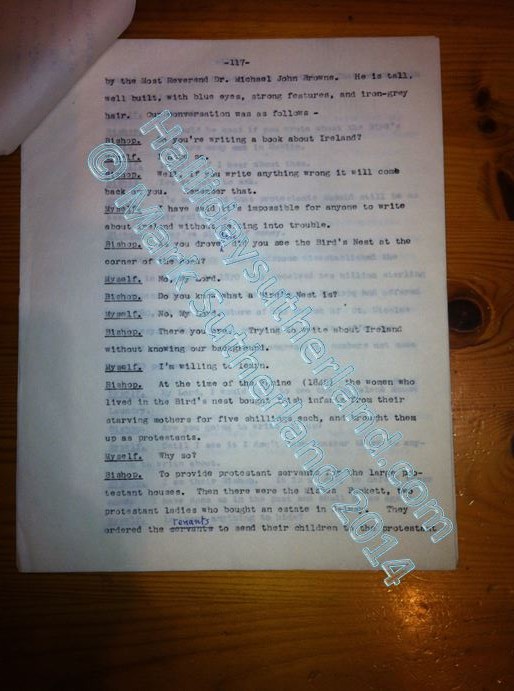
To visit the Magdalene Institution, Halliday had sought permission from the Bishop of Galway, the Most Reverend Michael John Browne. They met at 11 a.m. at the Bishop’s Palace. The manuscript recorded their conversation set out as if it were a play—odd, because Halliday’s usual style was prose. Now what followed was five pages of:
Bishop: …
Myself: …
Bishop: …
…and so on.
On reading the record of the conversation, it quickly became clear why it had been recorded this way: The spoken words, even without an author’s embellishment, convey the hostility of the Most Reverend Michael John Browne. Res ipsa loquitur.
Bishop: So you’re writing a book about Ireland?
Myself: I hope so.
Bishop: Well, if you write anything wrong it will come back on you. Remember that.
Eight lines later:
Bishop: There you are. Trying to write about Ireland without knowing our background.
Myself: I’m willing to learn.
On the next page, Halliday got to the point, and an already frosty meeting became colder:
Myself: My Lord, I would like to see the Magdalen Home Laundry.
Bishop: Are you going to write it up?
Myself: Until I see it I don’t know whether there is anything to write about.
Bishop: I am their Bishop. It is my duty to defend these nuns. I have done so in the past and I shall do so again.
Myself: Is there anything to hide?
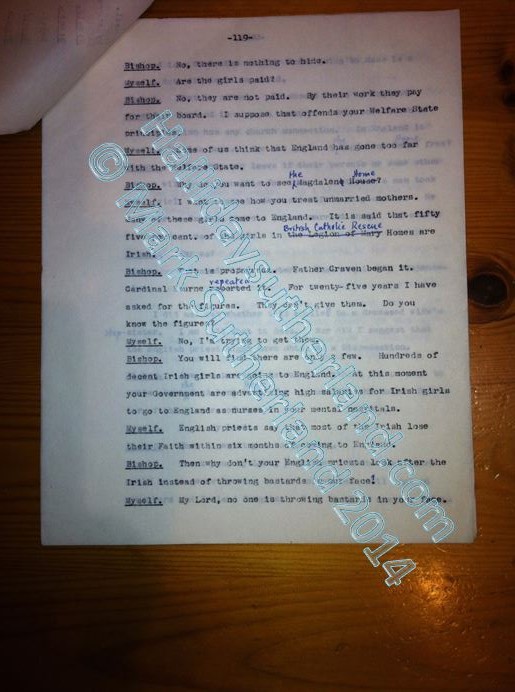
Bishop: No, there is nothing to hide.
Myself: Are the girls paid?
Bishop: No, they are not paid. By their work they pay for their board. I suppose that offends your Welfare State principles.
Myself: Some of us think that England has gone too far with the Welfare State.
Bishop: Why do you want to see the Magdalen Home?
Myself: I want to see how you treat unmarried mothers. Many of these girls come to England. It is said that fifty-five percent of the Girls in British Catholic Rescue Homes are Irish.
At this point Halliday was openly challenging the Bishop: Why are so many unmarried mothers crossing the Irish Sea to England? Is it something to do with your treatment of them? The Most Reverend Michael John Browne rebutted the challenge.
Bishop: That is propaganda. Father Craven began it. Cardinal Bourne repeated it. For twenty-five years I have asked for the figures. They can’t give them. Do you know the figures?
Myself: No I’m trying to get them.
Bishop: You will find there are only a few. Hundreds of decent Irish girls are going to England. At this moment your Government are advertising high salaries for Irish girls to go to England as nurses in your mental hospitals.
Myself: English priests say that most of the Irish lose their Faith within six months of coming to England.
Bishop: Then why don’t your English priests look after the Irish instead of throwing bastards in our face?
Myself: My Lord, no one is throwing bastards in your face.
Remember, “bastard” was a stronger word in 1955 than it is today, accompanied by stigma and inferior legal rights. Later in the conversation though, a deal was struck:
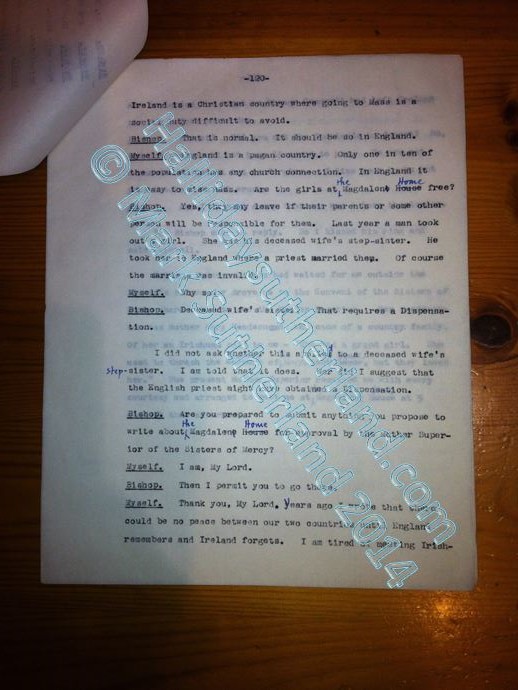
Bishop: Are you prepared to submit anything you propose to write about the Magdalen Home for approval by the Mother Superior of the Sisters of Mercy?
Myself: I am, My Lord.
Bishop: Then I permit you to go there.
Myself: Thank you, My Lord…
The first rule of negotiation is: when you have got what you want, stop talking. Nothing you can say will improve the outcome; everything you say might put the deal at risk. Halliday kept talking:
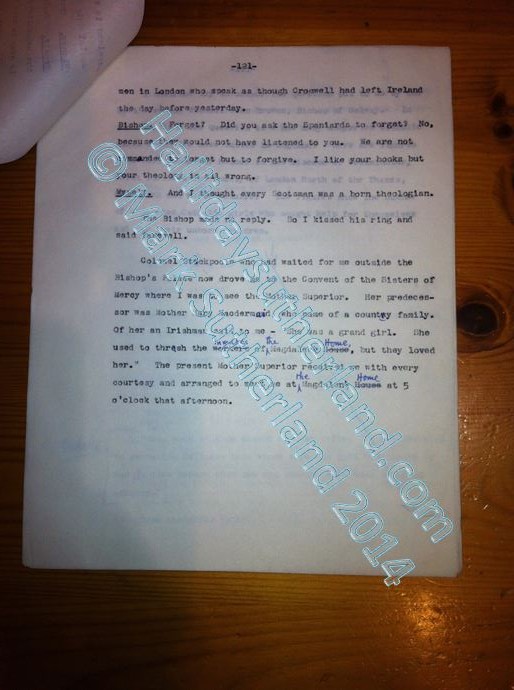
…Years ago I wrote there could be no peace between our two countries until England remembers and Ireland forgets. I am tired of meeting Irishmen in London who speak as though Cromwell had left Ireland the day before yesterday.
Bishop: Forget? Did you ask the Spaniards to forget? No, because they would not have listened to you. We are not commanded to forget but to forgive. I like your books but your theology is all wrong.
Why did Halliday say something so contentious after he had received the permission he sought?
A story Ian Sutherland (my father and Halliday’s son) told my brother might explain it: For many of his books, Halliday travelled to foreign parts and on his return would write about his experiences. His trip to Ireland followed this pattern, but the Irish book had an additional purpose. As a Scot married to an Irish woman, Halliday wanted to write something to reconcile the historic differences between Ireland and England.
Shortly after he had arrived in Ireland, Halliday had asked an Irish Catholic priest to say mass for his son Vincent, who had been killed, aged 21, in the war. The priest refused. Vincent had served in British forces. No mass.
Halliday was hurt by the priest’s reaction. Frustrated too, because as a Scot he was well aware of the violent history between his country and England. How could there ever be peace if a priest, given the choice between compassion and enmity, chose enmity? According to Ian, this had led to a change in the timbre of the book.
All that said, Halliday now had the permission he wanted. He had stuck to his side of the deal. When he had finished writing Irish Journey, he sent a draft of Chapter VII The Magdalene Home to the Mother Superior of the Sisters of Mercy. The Mother Superior had censored the draft, and returned the approved version for publication.
No one knew what the uncensored version contained, all parties taking their knowledge to the grave.
I was now holding that draft. I felt my stomach tighten when I saw Convent of Mercy, St Vincents, Galway embossed in the top right-hand corner of a page, the date 13 October, 1955 and read:
Dear Dr. Sutherland,
I return herewith your typescript containing your article about the Magdalen Home. If it makes no difference to you we would much prefer you did not include this article in your book at all. Should it not be possible for you to comply with our wishes in this matter would you kindly exclude the paragraph marked on page 122, and that marked at the end of page 123. I do not remember hearing anyone say that a girl ever ‘howled’ to be readmitted. They do come along and ask sometimes. Would you also kindly omit the piece marked on page 124.
Yours sincerely,
[signature] Sister M. Fidelma.
Mother Superior
I cleared a space on the table and photographed each page. I include copies of these photographs for readers of this blog. For the first time, readers can see Halliday Sutherland’s uncensored manuscript as well as the instructions as to which parts to remove. [UPDATE 13 January 2021: you can read higher resolution scans of the manuscript here (go to the dot points half-way down the page)]
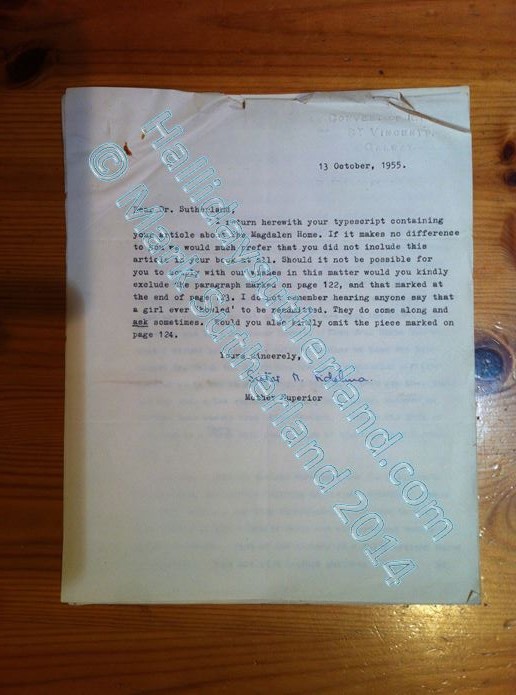
Look at the signature in the letter. Is the handwriting of the person who signed the letter and amended the draft the same person? You be the judge.
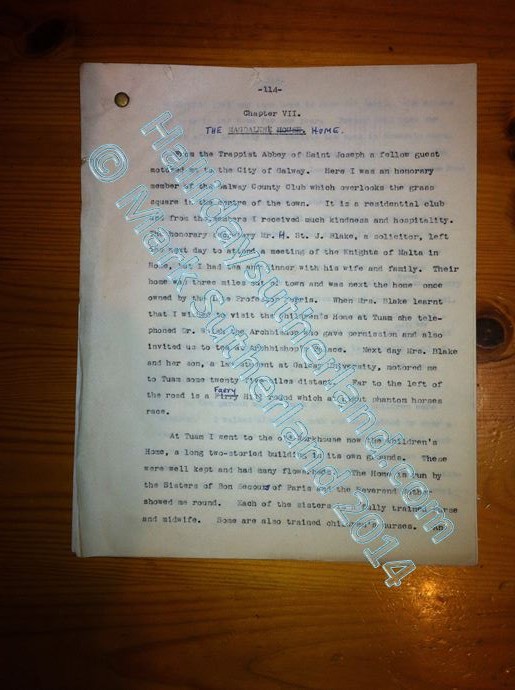
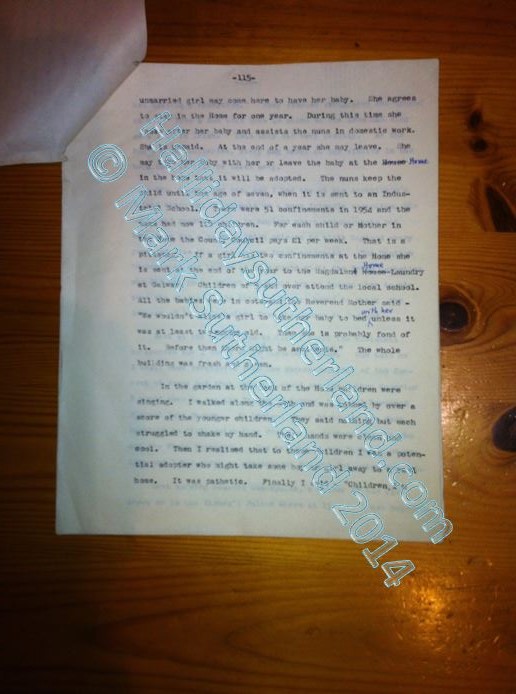
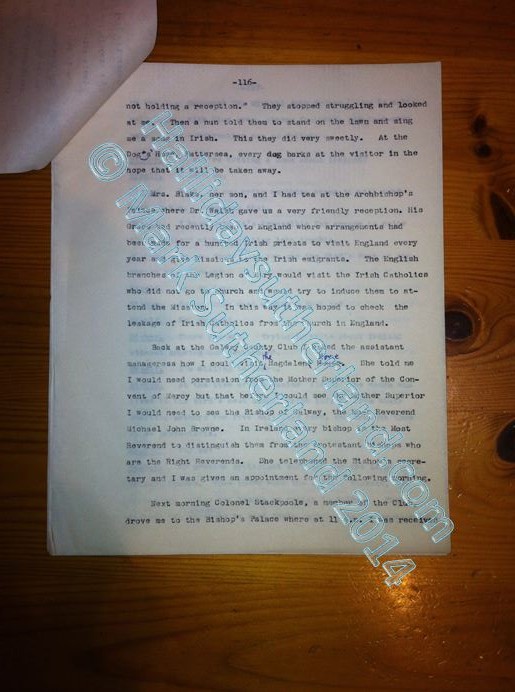
Halliday’s meeting with Bishop Browne starts on the page below.

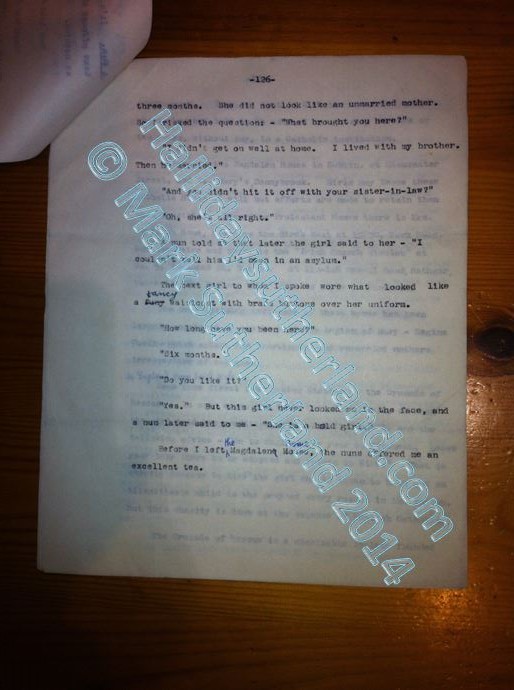
The visit to the Galway Laundry began at 5 o’clock. Halliday was introduced by the Mother Superior of the Convent of Mercy to the Sister-in-charge and six nuns who managed the laundry. He began questioning them about the 73 girls in their charge.
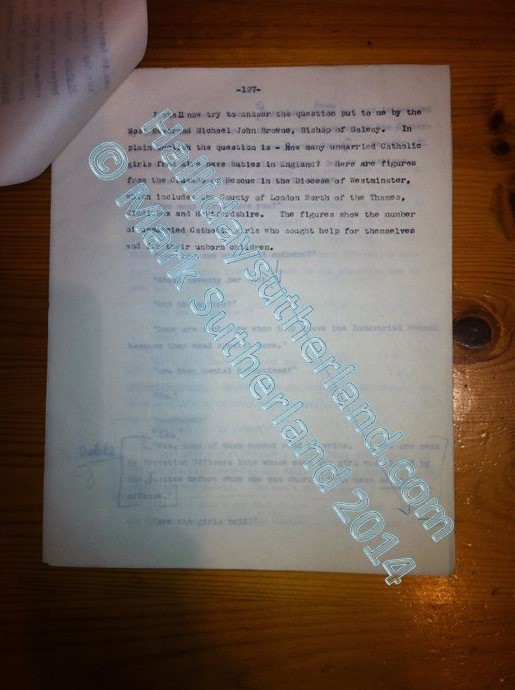
Page 122 contains the first significant amendment – a deletion. The deleted part reads:
“Yes, some of them cannot read or write. A few are sent by Probation Officers into whose care the girl was placed by the Justice before whom she was charged with some criminal offence.”
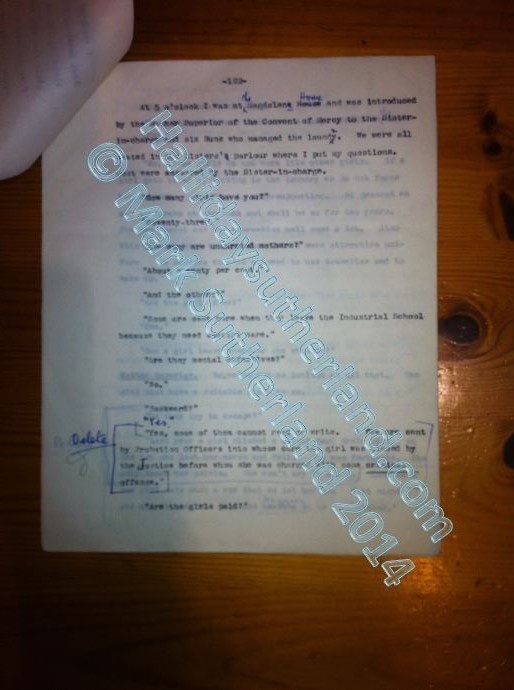
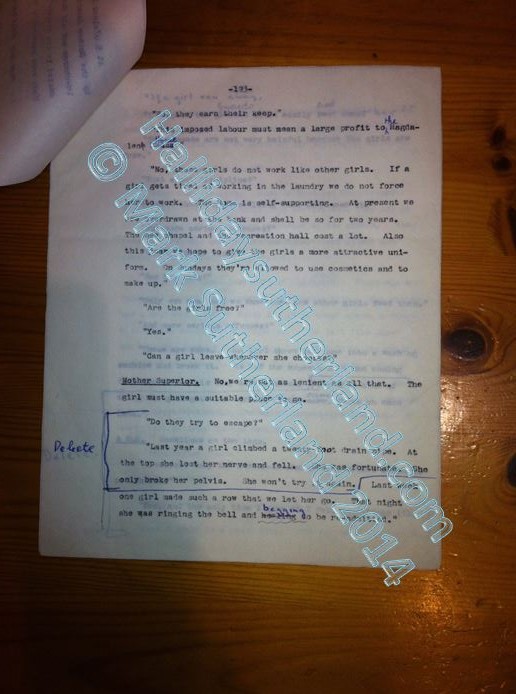
“Do they try to escape?”
“Last year a girl climbed a twenty foot drain pipe. At the top she lost her nerve and fell. She was fortunate. She only broke her pelvis. She won’t try it again.”
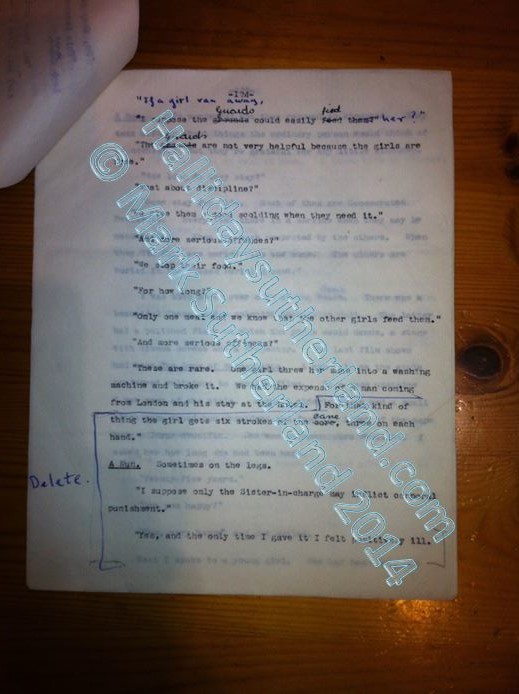
Page 124 contains the third significant amendment. A passage relating to corporal punishment is removed from the book:
“…For that kind of thing the girl gets six strokes of the cane, three on each hand.”
A Nun: Sometimes on the legs.
“I suppose only the Sister-in-charge may inflict corporal punishment.”
“Yes, and the only time I gave it I felt positively ill.”
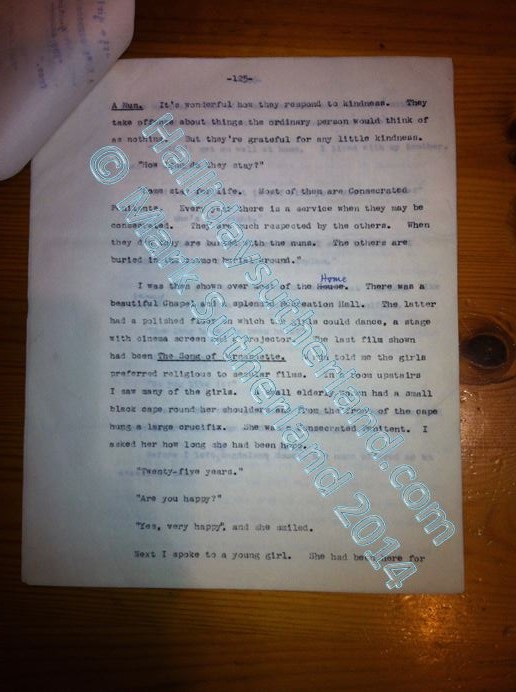
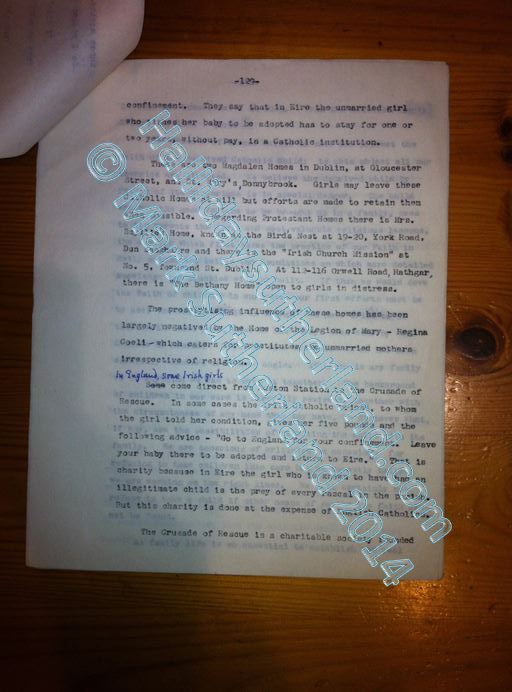
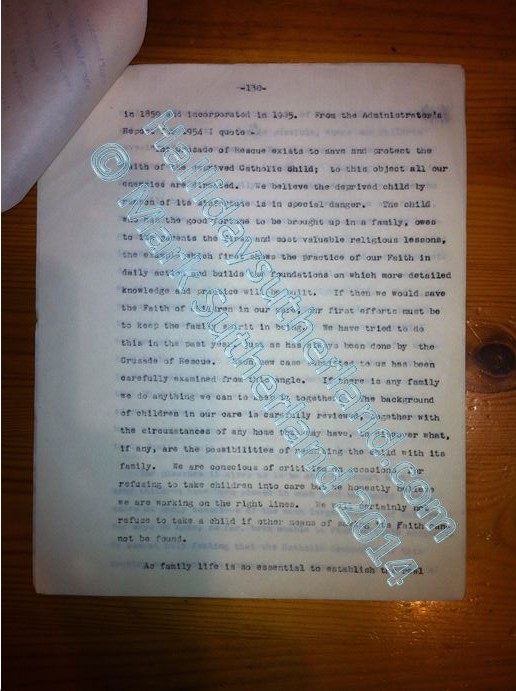
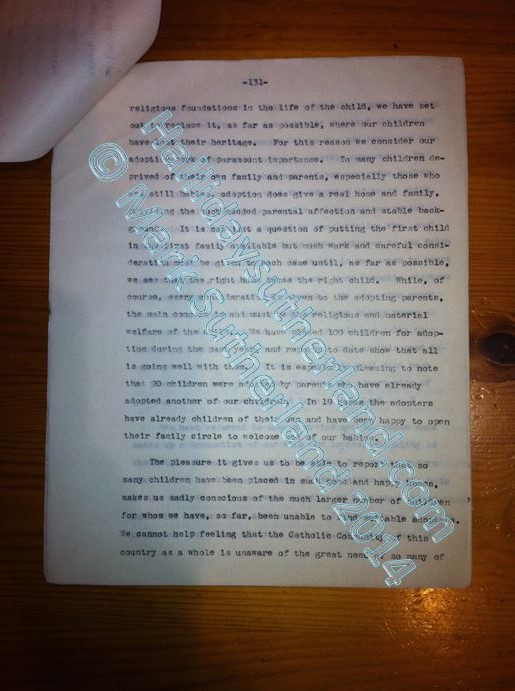
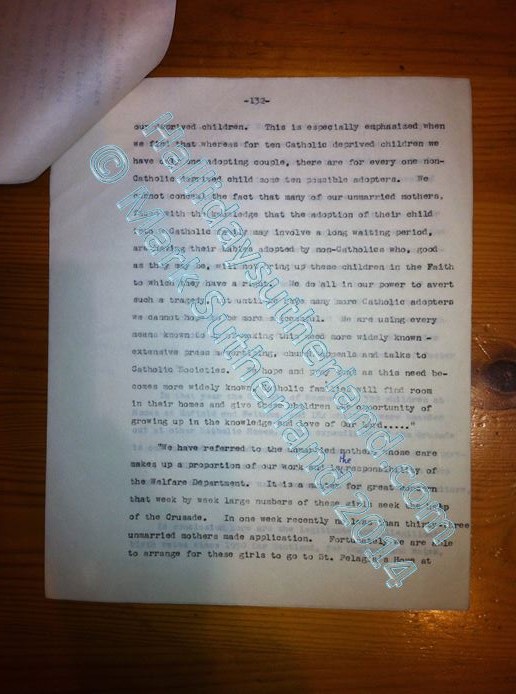
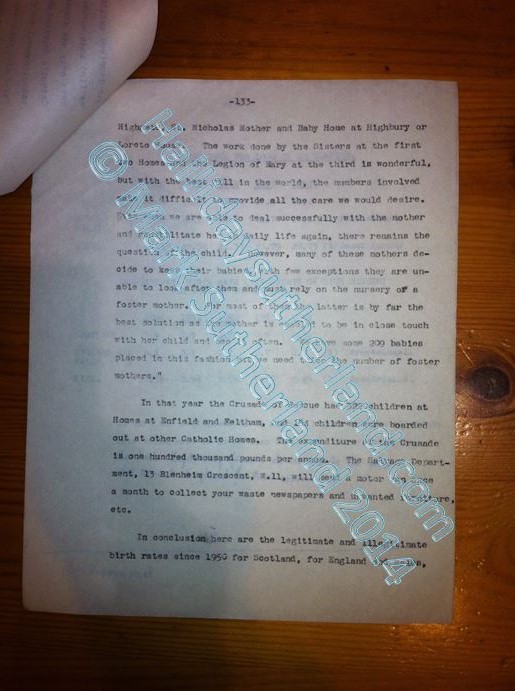
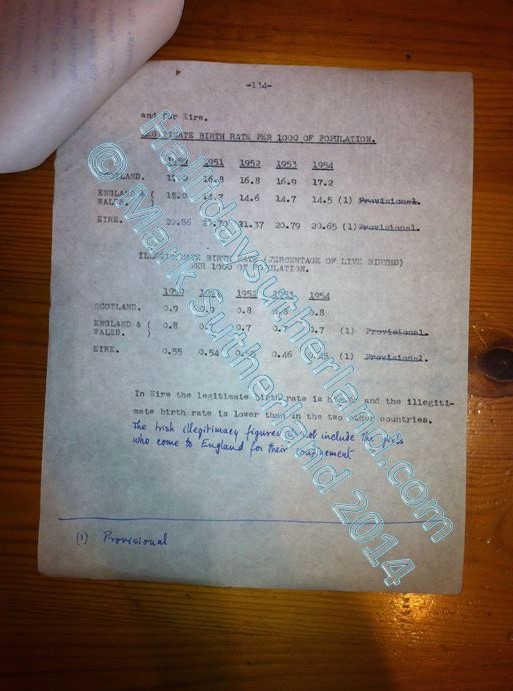
I have included all of the remaining pages below for completeness and for readers of this blog to assess the changes for themselves.
My lightheartedness had passed. I left the house and walked to the park, now appreciative of the weak winter sunlight after the dark world of of aggressive prelates, intolerant societies, fearful girls and harsh institutions. On a bridge, I stopped to watch the ducks in the river below, floating gently in the eddies of the oil-dark water. The records could wait.
EPILOGUE
In the 1958 American edition of Irish Journey, Halliday Sutherland added a preface in which he wrote:
In 1955 I wrote Irish Journey and this book has been damned by faint praise from every newspaper critic in Ireland. I was not surprised, because all the critics have ignored my main criticism, which concerns the Irish secular clergy. In my opinion they have too much political power. They hold themselves aloof from their people, and are too fond of money.
In the bad old days, when Ireland was subject to the foreign power of England, the parish priest was probably the only educated man in an Irish village. The foreign power has been driven out, the people are better educated, but the parish priest is loathe to relinquish his political power.
During my Irish holiday, I was assaulted by a total stranger in a Tipperary hotel. The incident was reported in all the Dublin papers, and when I returned to my Dublin hotel, the receptionist said to me, “Will you be writing about it?” I told her I would, and she replied, “That won’t be nice.” She was obviously afraid that the record of this incident would spoil Ireland as a show place.
Ireland is certainly a wonderful show place, and heaven may reflect Killarney; but as a Scotsman I think Loch Lomond, twenty miles from Glasgow, is more beautiful.
Another day a well-known man called at the hotel to see me. I met him in the lounge, but he asked me out to his car, I asked him where we were going and he said, ” Nowhere, but there were too many people in the lounge who might overhear what I am going to ask you, and that is not to mention me in your book.”
“And why not?”
“They wouldn’t like it.”
I know that he meant the Irish hierarchy, It is strange how the shadow of the hierarchy falls on the most unexpected places in the public life of Ireland.
If Ireland goes communist within the next ten years, I think the secular clergy will be to blame.
The “Catholic Medical Guardian” of London gave my book an excellent review and said that my account of the assault on myself in a Tipperary hotel recalled the best chapters in “Handy Andy”. But a copy of my book was sent to a nun in Dublin who replied, “This book should be burnt by the public hangman.”
I only hope that what I have written will be more appreciated in the clearer air in the United States of America.
Ireland is currently debating the issues around eight hundred infant bodies found in an unused septic tank at the mother-and-baby home at Tuam. What is done as a result of these noisy, conflicting voices will determine whether this state of affairs has changed, and by how much.
©Mark Sutherland 2014

