Introduction
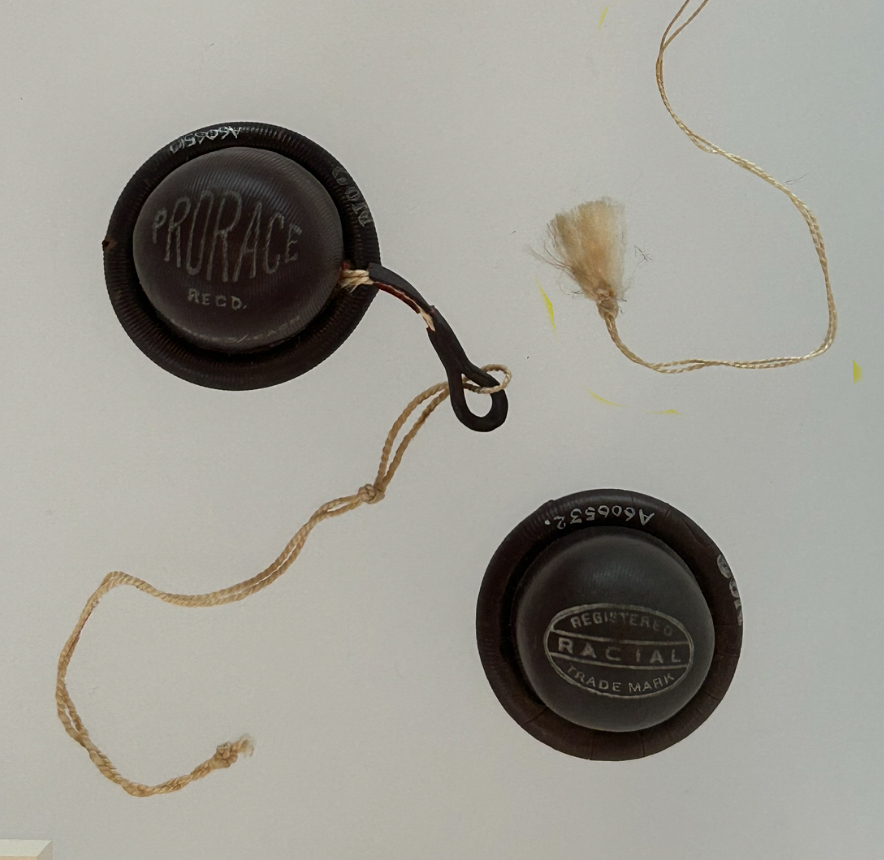
In the early 1920s, Marie Stopes distributed contraceptive devices under two striking brand names: “Prorace” and “Racial.” To many modern readers, these labels appear jarring—yet in Stopes’s time, they were meant to be reassuring, signalling scientific respectability and alignment with the fashionable goal of “improving the race.”
These brand names were not incidental nor decorative. They expressed Stopes’ long-standing belief that birth control was necessary to prevent the “unfit” from reproducing, while promoting increased fertility among those she considered “desirable.” In other words, the brands are one of the clearest windows into her eugenic worldview.
This article explains what the “Prorace” and “Racial” brands were, how Stopes justified it, how it appeared in official documents, and why it matters for understanding the origins of birth control activism in Britain.
What Were the “Pro-Race” and “Racial” Brands?
Contraceptives marketed to promote “racial improvement”
When Marie Stopes and Humphrey Roe opened the Mothers’ Clinic in Holloway on 17th March 1921, it was Britain’s first family birth-control clinic. The primary device used was the cervical cap, and the Mothers’ Clinic provided these free-of-charge or at-cost to women who attended the clinic.
The choice of the brand names “Prorace” and “Racial” was deliberate. It aligned birth control with the idea of selective reproduction, a concept Stopes believed was essential to Britain’s national survival.
Why Did Stopes Use the Word “Race”?
Because she believed birth control should shape the population
Marie Stopes repeatedly argued that Britain must encourage the “best stock” to have more children, while discouraging reproduction among those she called:
- “the diseased,”
- “the miserable,”
- “the inferior,”
- “undesirables,”
- “parasites.”
Her 1921 Tenets of the C.B.C. explicitly classed tuberculosis and poverty as forms of “racial disease.”
Connecting eugenics with consumer products
“Pro-Race” branding was an attempt to:
- reassure middle-class couples that contraception was respectable,
- frame birth control as a civic duty,
- signal alignment with eugenics, the scientific movement of racial improvement,
- and differentiate her products from commercial competitors.
It was branding that functioned as ideological packaging.
What the “Pro-Race” Brand Reveals About Stopes’ Early Thinking
1. Birth control was not purely humanitarian
Stopes genuinely believed birth control would help women—but she also believed it would reshape the population by preventing the “wrong” people from having children.
The brand names show she saw contraception as a tool for national biological reform along eugenic lines, not only personal freedom.
2. Her clinics aimed to influence who reproduced
The Tenets make this explicit:
- “fit” childless couples should be encouraged to conceive
- “racially diseased” people should avoid conception
- poverty was a sign of “worthlessness”
These assumptions shaped her clinic’s mission and align with the “Pro-Race” and “Racial” brands.
3. The eugenic frame was marketed as “science”
In the 1920s, eugenics was widely viewed as respectable and was supported by members of the establishment and intelligensia. Contraceptives, on the other hand, were not. While they were widely available to those who wanted them (through catalogues and rubber shops) poor and working class women were the least likely to use them.
The “Pro-Race” and “Racial” branding allowed Stopes to present herself as:
- rational,
- modern,
- scientifically grounded,
- and aligned with elite opinion.
4. The brand names highlighted Stopes’ racial agenda
Stopes believed that were her Mothers’ Clinics to proliferate across Britain and her recommendations adopted, Britain would be transformed within a few generations.
“It is my prayer that I may present such a racial ideal, not only to my own people but to humanity. It is my prayer that I may live to see in the generation of my grandchildren a humanity from which almost all the most blackening and distressing elements have been eliminated, and in which the vernal bodily beauty and unsullied spiritual power of those then growing up will surpass anything that we know to-day except among the rare and gifted few. This is not a wild dream; it is a real potentiality almost within reach. The materialization of vital racial vision is in the hands of the mothers for the next twenty or thirty years.”
“Radiant Motherhood” (1921) Marie Stopes. G.P. Putnam’s Sons, page 243.
Why This Matters Today
1. Understanding the origins of birth control activism
Stopes’ work in proliferating contraceptives in Britain was deeply entangled with eugenics.
Pro-Race branding is evidence of this intersection.
2. Correcting historical oversimplification
Some modern accounts frame Stopes purely as:
- a pioneer of women’s rights,
- a family planning advocate,
- the women who gave British women “reproductive choice”.
Some frame Stopes’ eugenic beliefs as adjacent but otherwise unconnected to her birth-control work. Others state that her programme was primarily about spacing births and yet others, conceding that she was a eugenicist, state that she wasn’t a very good eugenicist! It is challenging for anyone to discover that someone whom they held in high regard had some distasteful views but, on the other hand, this is precisely the sort of emotional turmoil that is the lot of the biographer and historian. They need to be guided by the evidence rather than their feelings.
Stopes’ brands shows she was a racial reformer with a programme for selective reproduction and sterelization to improve British racial stocks.
3. Restoring context to the Stopes v Sutherland case
Dr Halliday Sutherland criticised Stopes’ eugenic agenda in 1922.
Her eugenic agenda was what he wrote she was “exposing the poor to experiment.” It was, he said, a “social experiment” the results of which would only be known far into the future.
Sutherland also argued that “if children are to be denied to the poor as a privilege of the rich,” Britain would become a servile state.
The branding helps explain:
- why he objected,
- why the issue escalated into a libel case,
- and why the trial still matters.
Conclusion
Marie Stopes’ “Pro-Race” and “Racial” branded contraceptives are among the clearest material evidence of her eugenic worldview. They demonstrate that she saw birth control as a mechanism for reshaping society, not simply a tool for relieving women’s burdens.
Understanding this branding is essential for reconstructing the historical truth about the birth control movement, the eugenics movement, and the Stopes v Sutherland conflict.

Leave a Reply